Improve Your Photography with AI — Not Your Photographs
Part 1. Arguing with the Machine
This is the first post in a series on using AI to become a better photographer — not to retouch, manipulate, or generate better-looking photographs, but to sharpen the eye behind them.
I spent a few days photographing Mare Island — the decommissioned naval shipyard across the strait from Vallejo, where the Navy built and repaired ships for the better part of a century and then, in 1996, walked away. I came home with a couple of hundred frames across these visits, one with the Q3, the others with the Hasselblad, and then I did something I would have rolled my eyes at a year ago. I opened a chat window with an AI, uploaded the first picture, and asked it whether the image was ruin porn.
That small act — a photographer asking a machine to judge a photograph — is exactly the kind of thing that's supposed to frighten us now: proof, we're told, that the generative AI is coming for the medium. I think the fear gets it backwards. These systems are pattern matchers. They generate by recombining what they've been fed, and what they're fed, overwhelmingly, is photographs. The model that supposedly threatens the medium is built entirely out of the medium; it cannot produce a convincing image of the world without first having been shown millions of real ones, made by people who went out and looked. That dependency is permanent — every new model needs new ground truth, and ground truth is exactly what a photographer standing in an actual place at an actual hour is the only one who can supply. So photography doesn't die. It becomes the thing the whole apparatus runs on. Which is why I think the anxiety is pointed at the wrong target and makes the entire argument kind of moot. The valuable use of AI isn't to make better photographs; it's to make better photographers. Used as a critique partner — a tireless, well-read, fallible digital mentor available at any hour the work keeps — it doesn't replace your eye, it sharpens it. The camera stays in your hands. The seeing stays yours. The machine just gives you something to argue with on the way to seeing better.
None of this is to say AI can replace a good human mentor. I'm lucky enough to have one. But great mentors are rare and busy, and no matter how generous, they can't look at every mediocre frame you shoot — and most of what we shoot is mediocre. That's the gap the machine fills: not the considered judgment of someone who knows your work, but the tireless second opinion
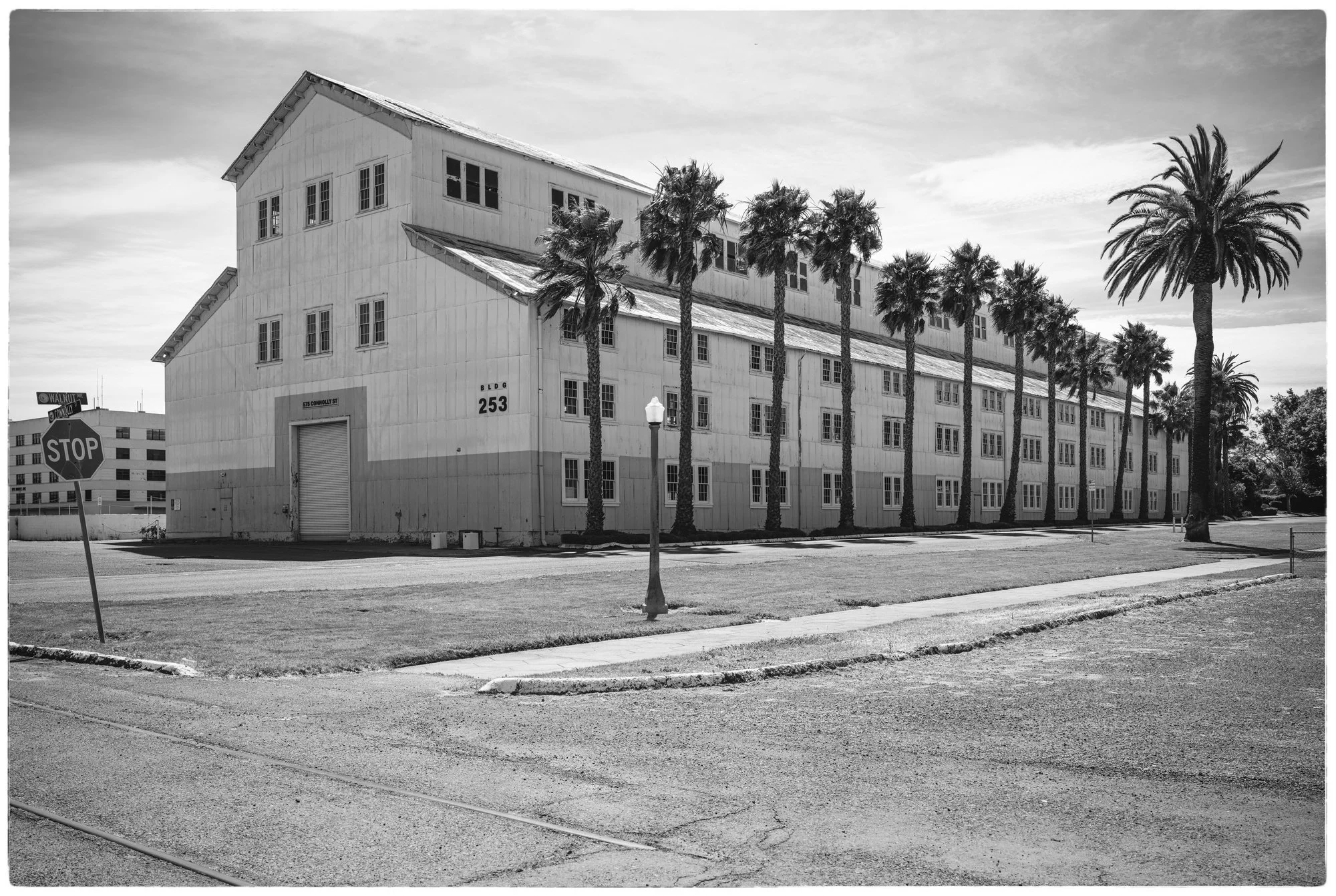
This photo was rejected by Claude as a crowd-pleaser. I agree.
What follows is not an advertisement. I am a skeptic by temperament and a documentary photographer by practice, and I distrust anything that arrives promising to make the work easier. I'm also a software engineer with more than twenty years of experience and two computer science degrees. Using a language model as a critique partner did not make the work easier. It made it harder, in the specific way a good critic makes it harder: by refusing to let a worry stay vague, by noticing what I'd rather not notice, and — this is the part nobody tells you — by being confidently, fluently wrong often enough that I had to stay awake. If you want a tool that confirms you are already good, this is not the essay for you, and that is not the tool. But as a mentor of a particular, limited, argumentative kind, it earned its place in my process. Here is what I learned about how to use it, and, just as important, how not to.
What it is genuinely good at
Start with the thing it does that a human critic, however gifted, struggles to do: it holds the whole body of work in its head at once.
When you show a friend a print, they see the print. When you show them twelve prints, they see twelve prints and a blur. The machine does not blur. I fed Claude images one at a time over a long session, and by the eighth or ninth it had started saying things no single-image reading could produce. It noticed that every time I found the strongest piece of content in a frame — a sign, a number, the evidence that the dead military yard was being succeeded by a distillery and a tourist promenade — I had shoved that content into a corner of the composition and given the center to empty asphalt. It put the point plainly: I was photographing the succession and framing the vacancy. That was true. It had been true for two years and nobody, including me, had said it out loud, because nobody had been looking at thirty of my frames in a single sitting with perfect recall.
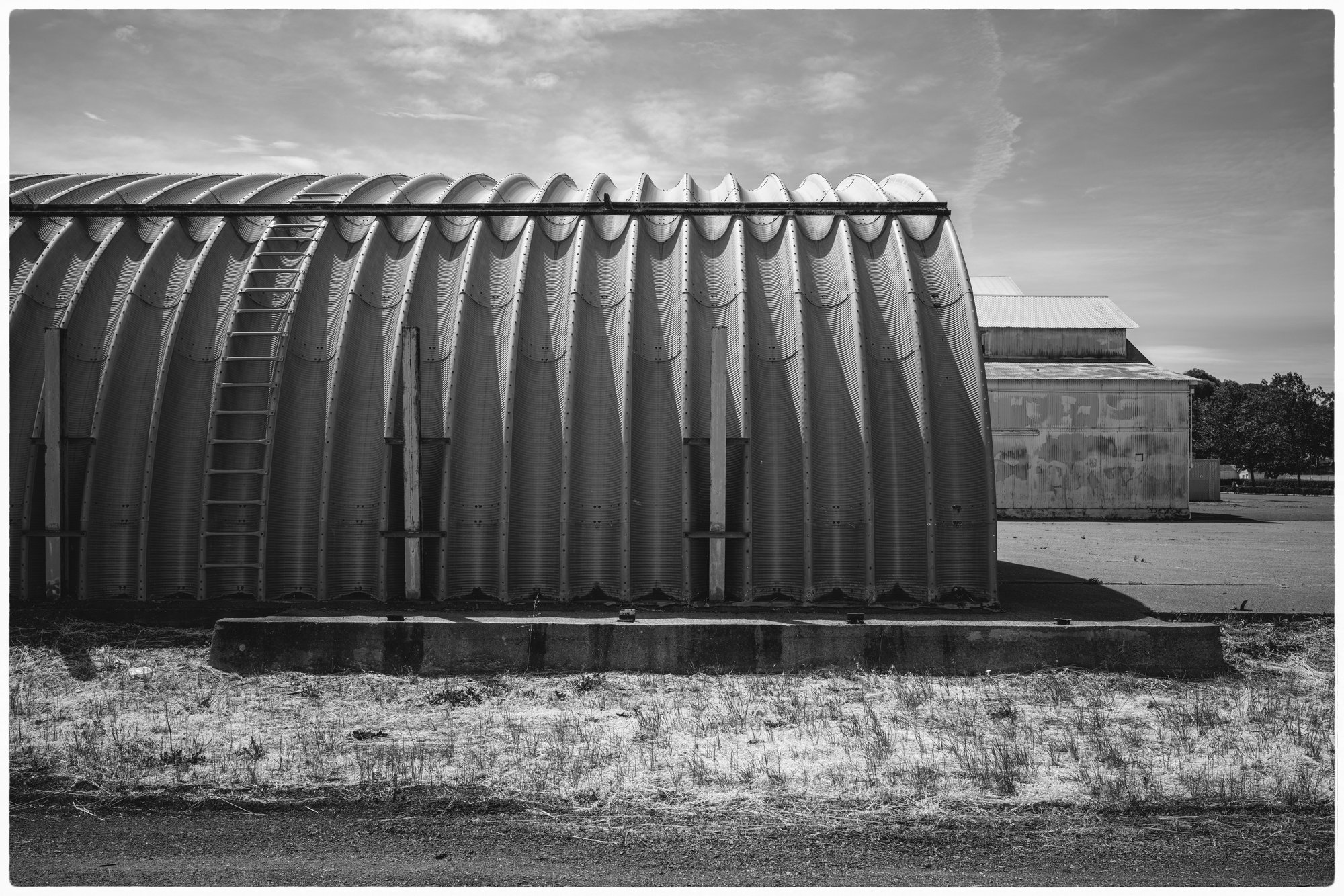
One of my favorite frames from the shot. Claude agrees.
It did the same with form. It caught that I was oscillating between two ways of shooting — flat, frontal, catalogue-style elevations on one hand, and oblique, deep, threshold-and-foreground compositions on the other — and that I kept switching grammars without deciding which was the spine of the work. It noticed that an empty parking lot with painted lines had become a signature of mine, recurring frame after frame, and that the signature only worked when there was a building event above it worth the acreage. None of these are profound observations. They are the kind of thing a sharp editor says after living with your contact sheets for a month. The machine said them in an afternoon, because pattern detection across a large set of images and a long thread of text is exactly the kind of labor it is built for.
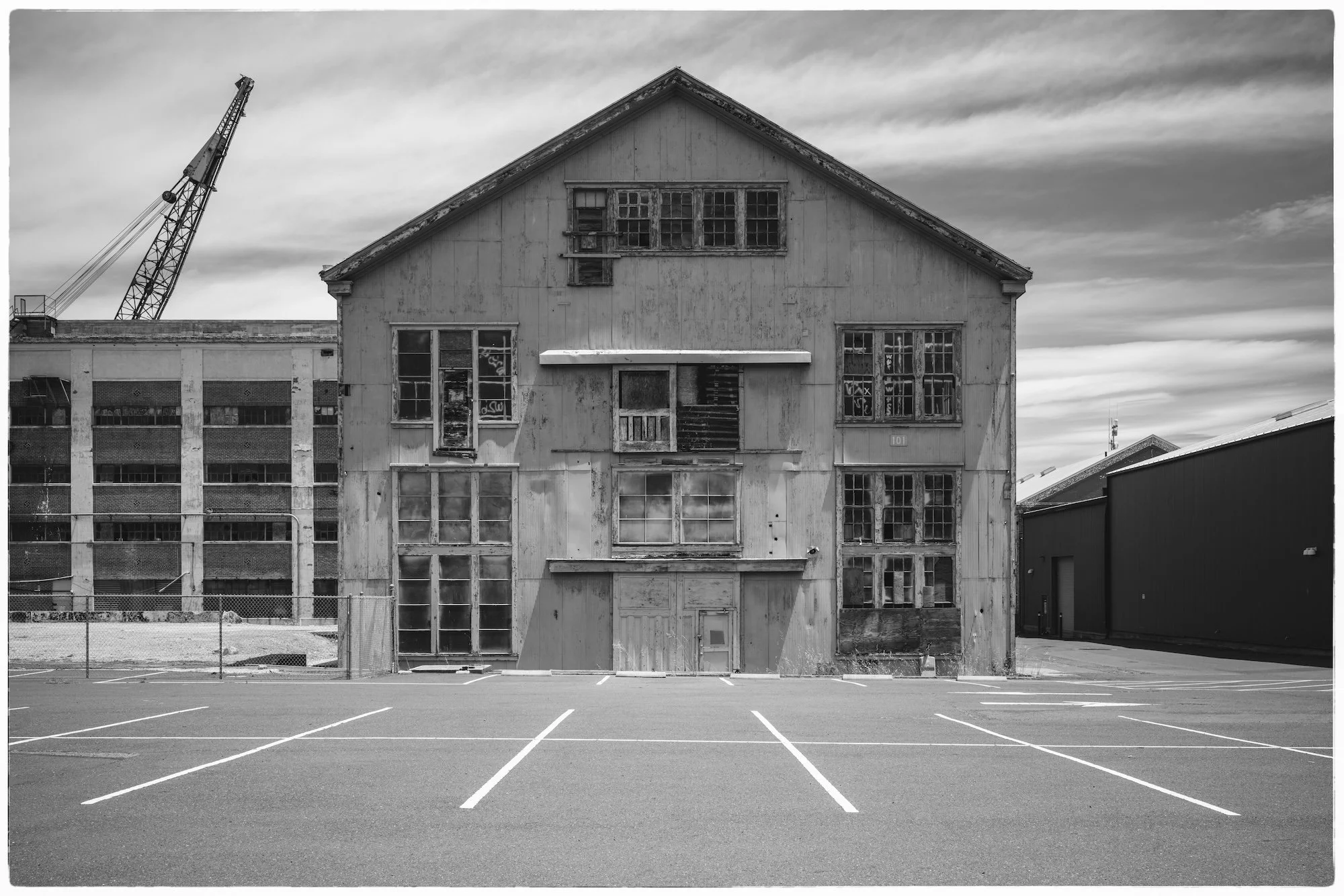
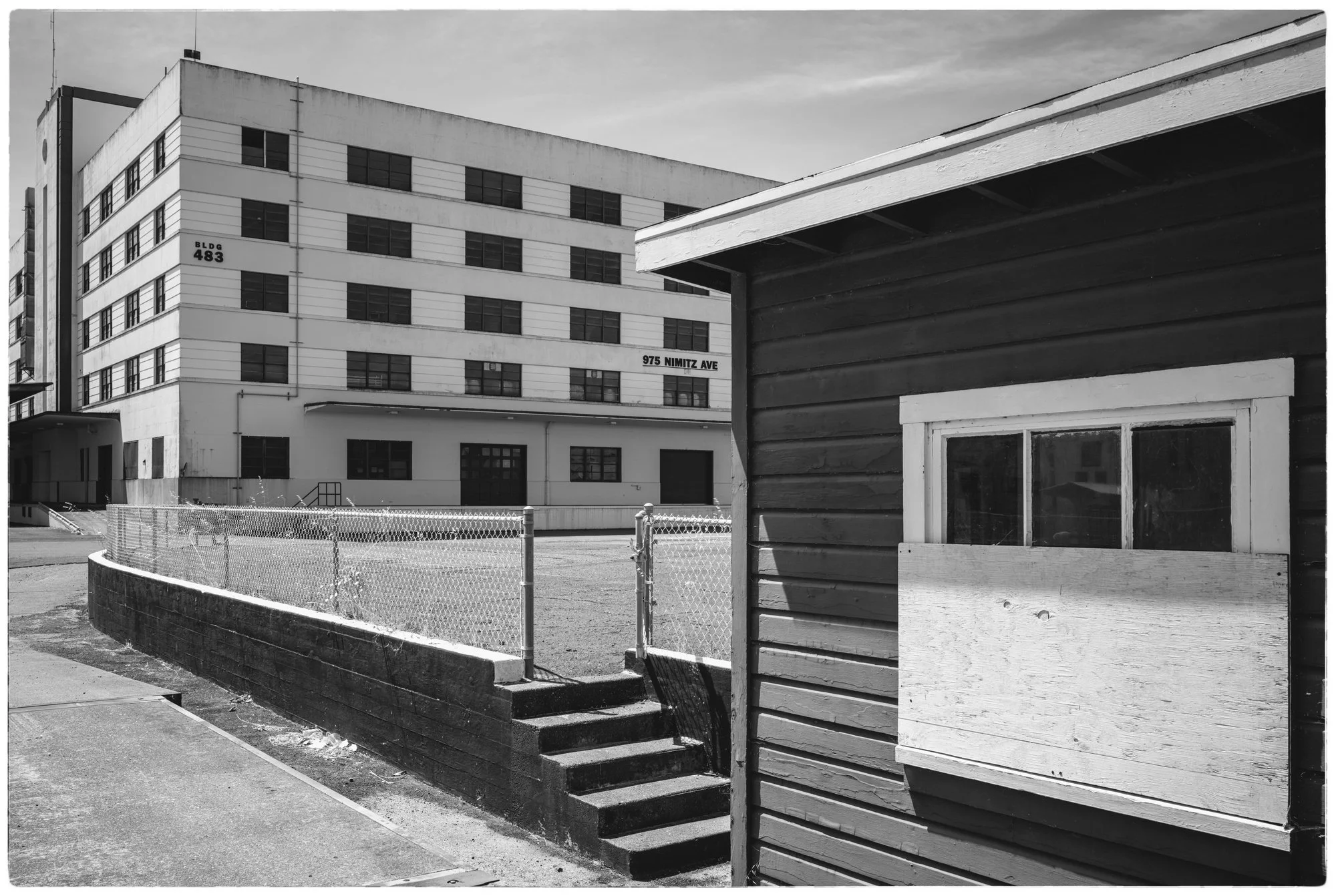
So the first use is structural. Not "is this a good photograph," which it answers poorly, but "what am I actually doing across all of these, and am I doing it on purpose." For that question it is better than any human I have shown the work to, simply because it does not get tired and does not forget frame three by the time it reaches frame thirty.
It can be confidently wrong. That is where the value is
Now the part that matters most, and the part the breathless coverage leaves out.
Partway through the second day's edit, the machine told me a black-and-white frame had a "dramatized," "theatrical" sky — that I had "burned it down" and was "giving in to the temptation" of drama. It said this with total fluency and not a flicker of doubt. The trouble is that it was wrong on a point of fact. The sky looked exactly as it had looked that afternoon; if anything I had pulled the drama down in processing. The machine had asserted a thing it could not possibly perceive — what I did or didn't do at the computer — and dressed the assertion in the confident prose it dresses everything in.
I pushed back. And here is the whole lesson of using these tools compressed into one exchange: it conceded immediately, and then it taught me something true. It explained the mechanism that had probably misled it — that converting a blue sky with high cloud to black and white intrinsically dramatizes it, because darkening the blue channel separates the clouds hard against the sky, the old red-filter look, so "looks dramatic" and "was dramatized" are not the same thing and it had confused them. And it went further: it admitted it had reached for a principle of mine — the saklig, matter-of-fact restraint I inherited from Hans Strand — and applied it backwards. A faithful rendering of a genuinely dramatic sky, it conceded, is more matter-of-fact, not less. Flattening a real sky to look calm would have been the stylization. I had been right and it had been wrong, and in the course of being corrected it produced a more useful account of the situation than either of us had started with.
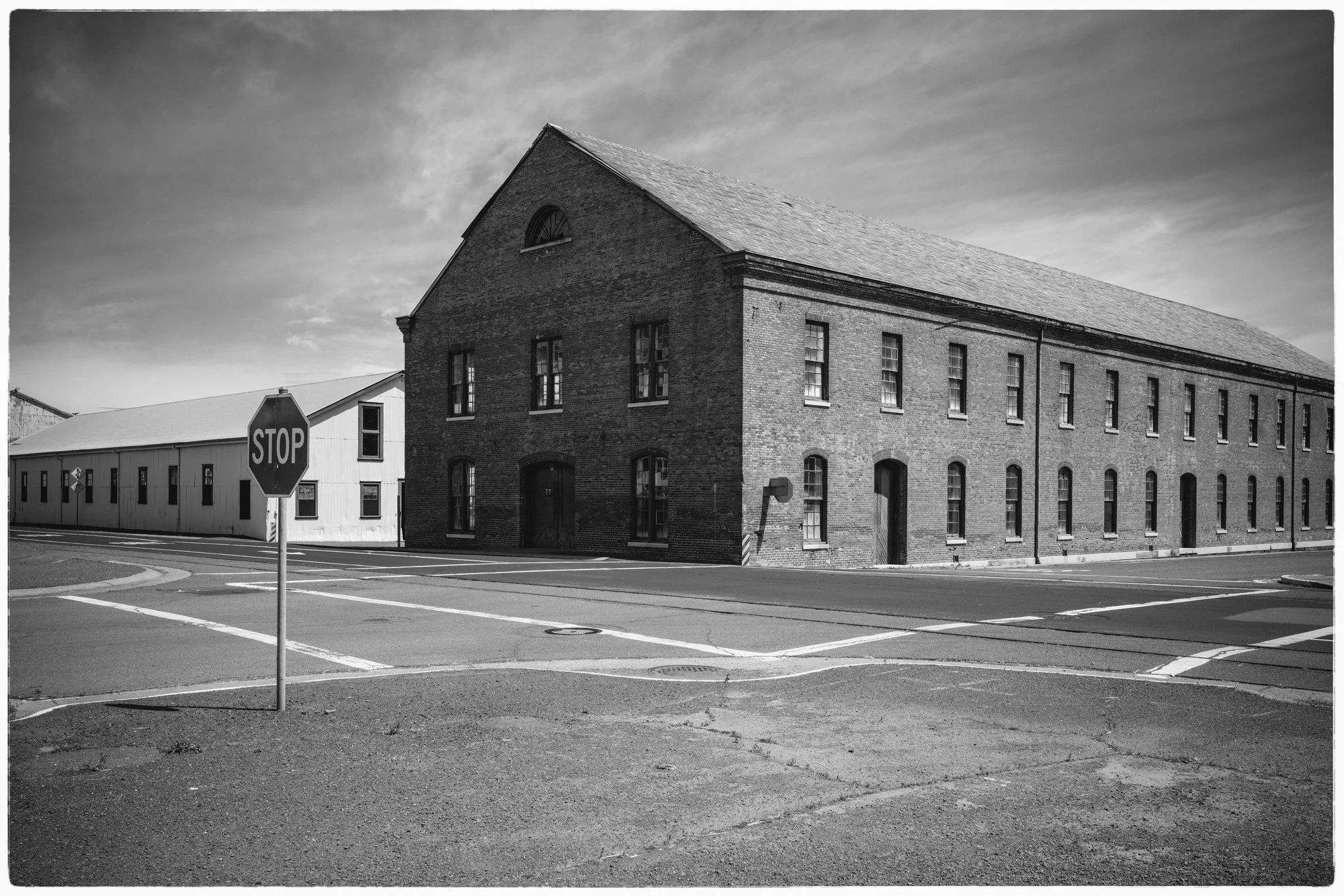
Claude believed that I added drama to the sky. I did not.
This is the single most important thing I can tell you. The verdicts are not the product. The verdicts are frequently unreliable. The product is what you are forced to articulate when you defend your work against a confident, specific, occasionally wrong interlocutor. The machine is valuable the way a worthy opponent is valuable: not because it is right, but because it makes you say why you are. If you accept its judgments passively, you will be led around by a system that hallucinates intent, asserts process it cannot see, and states everything — the true and the false alike — in the same even, persuasive register. If you argue with it, you get an articulation of your own intentions sharper than you walked in with. Treat its confidence as provisional. Treat the friction as the point.
It will measure you against the canon — refuse it
There is a second failure mode, subtler than being wrong about a sky, and you have to watch for it constantly.
The machine is trained on everything that has been written about photography, which means its instinct is to reach for the canonical comparison. For the first dozen frames, nearly every observation came wrapped in a reference: this is the deadpan of the New Topographics, this is a Becher-style typology, this is a Shore street view, this is what Gerry Johansson would do. Some of that was useful shorthand. A lot of it was a cage. When you are handed a vocabulary that good, it is tempting to let it describe your picture for you — and a reference, however apt, quietly reframes your work as a better-or-worse version of someone else's.
I finally told it to stop. This is mine, I said — however strange the mix of registers, this is how I see the place, and I am not interested in conforming to a tradition, however well established. To its credit, it took the correction and then drew a distinction worth keeping. There were, it said, two different things it had been doing. One was framework-talk — is this Becher or Shore, pick a school, obey a convention — and that I should throw out. The other was not about tradition at all: when it said my strongest content kept landing in the margins, that was measured against my intent, not anyone's canon, and it survived with every famous name stripped away.
No canons. Just the way I see it.
That distinction is the practical takeaway. The machine will default to the canon because the canon is what it has read. You have to actively refuse the comparisons and insist it critique you on your own terms — and then you have to do the work of telling it what your terms are. Which leads to the most important habit of all.
Feed it the way it actually works
A language model is not a magic eye. It is a pattern-matcher operating on the image in front of it and the words you have given it, and the quality of what comes back is almost entirely a function of how you set it up. A few things I learned by trial and error:
Show it one frame at a time, or in small, deliberate sets. Dumping forty images at once gets you forty shallow reactions. Feeding them sequentially lets the cumulative reading build — the pattern detection that is the tool's real gift only emerges over a sustained thread.
Tell it your aims before you ask for judgment. The single biggest improvement in the quality of the critique came when I stopped asking "is this good" and started telling it what I was after — the project's preoccupations, the principle I work by, the thing I was trying to find in the place. Once it knew I was chasing a thesis about control and institutional succession, not just documenting handsome decay, it could tell me whether a given frame served that thesis. Without that context it can only give you the generic response, which is the canon and the cliché.
Use it to work the subject. The most concretely useful exchanges were the ones where I gave it three or four takes of the same building from different distances and asked which framing served which idea. It was good at this — at saying this one is a portrait of the sealed facade, that one is about exclusion, and here is the version none of these quite is, the one you should go back and shoot. That is editing labor, and it is precisely the labor that is hardest to do on your own work because you are too close to it.
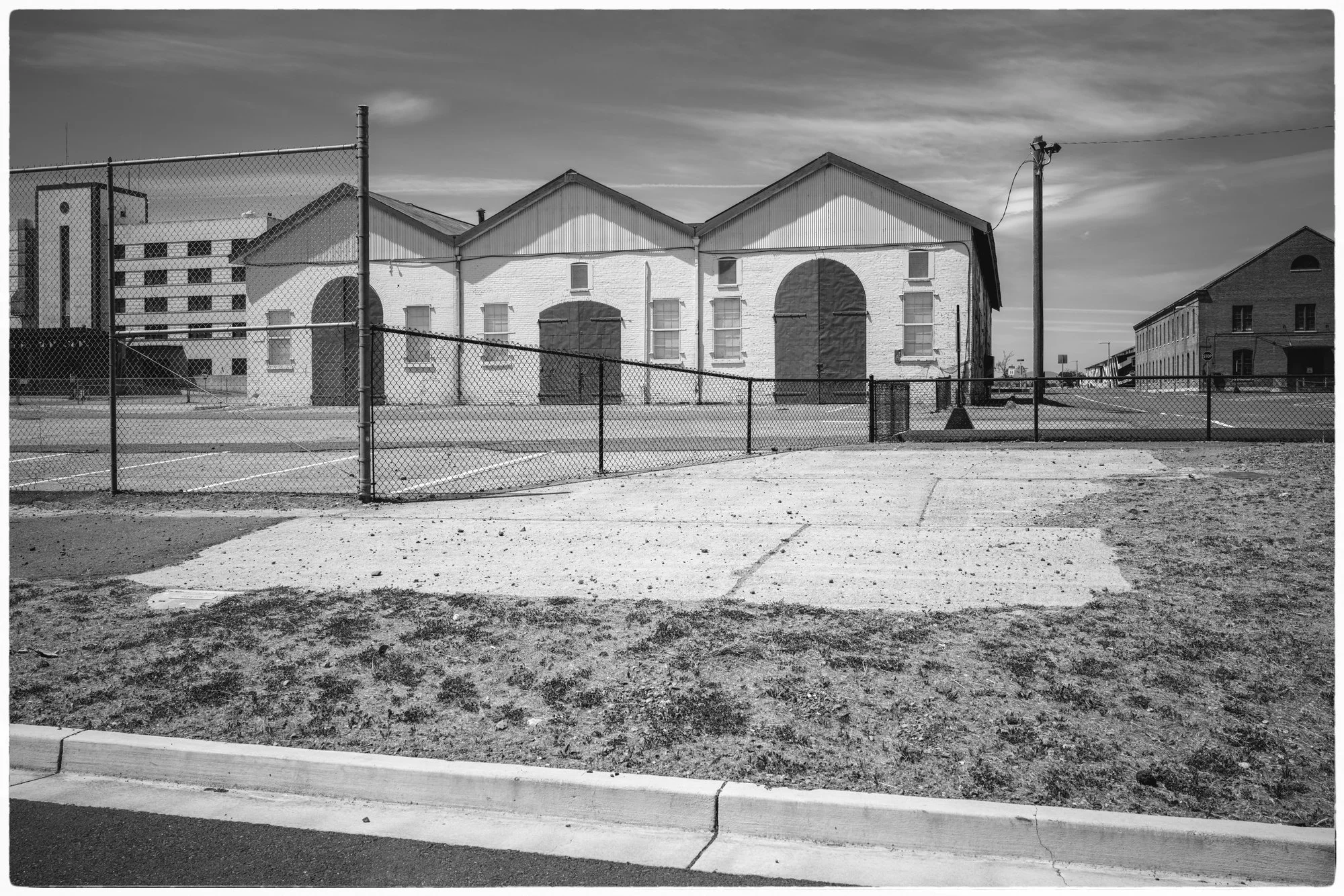
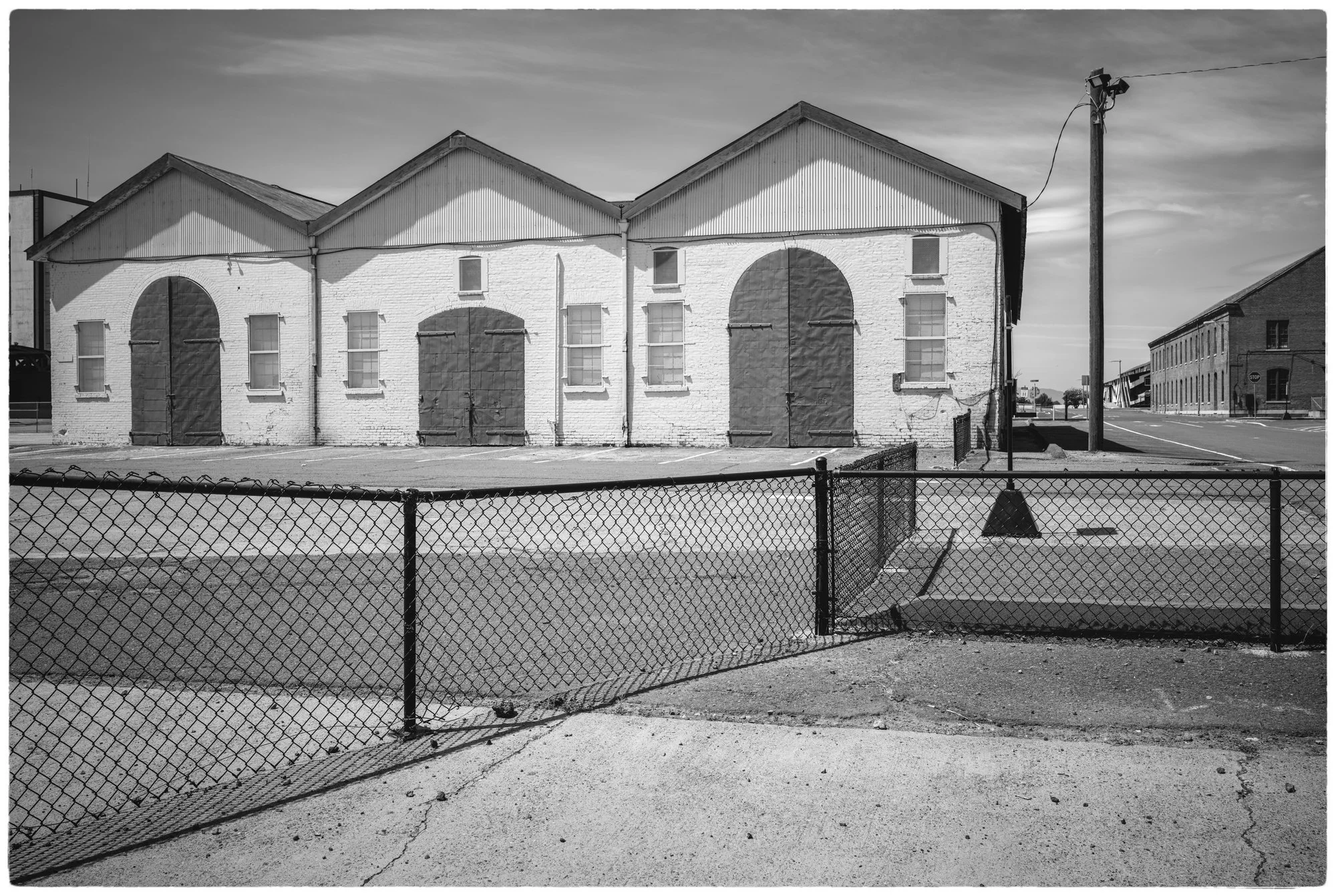
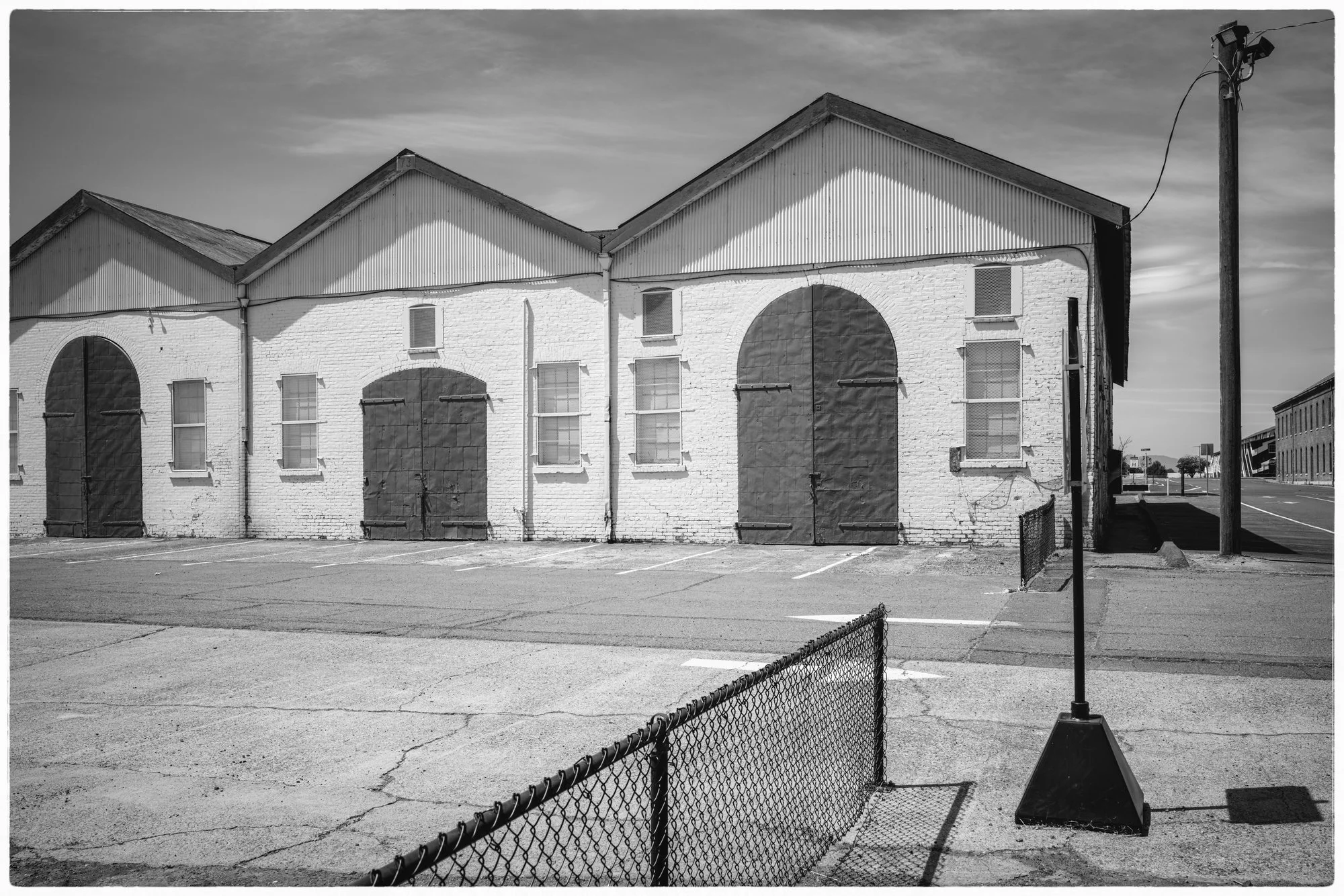
And let it remember. Across two sessions it connected a building's public face, shot in color on the first trip with a distillery's sign on it, to the same building's back-of-house guard booth, shot in black and white on the second — and pointed out that I now had a pairing about who gets let in now and who used to decide. It told me one near-and-far composition had finally solved a problem an earlier frame had failed at, and that I could retire the weaker one. That kind of cross-referencing, over a body of work too large to hold in your own short-term memory, is something it does easily and I cannot.
Use it against your own self-deception
Every photographer lies to themselves about certain pictures. We fall for the frame we worked hardest on, or the one that is merely beautiful, or the one that flatters the trip. A good mentor's most uncomfortable job is to catch you in the lie, and the machine — precisely because it has no investment in your feelings and no fatigue — is well suited to it, provided you have told it what you are actually after.
I sent it a frame I had edited four separate times, a handsome building with a file of palm trees marching down an avenue. It told me, more or less, to be careful: this was the most conventionally lovely thing I had shown it and one of the least characteristic, the kind of picture the place wants you to take, and the four edits were a sign I was being talked into it on looks. It was right. It then offered a way the picture could belong — read the palms as the institution's own imposed order, landscaping as discipline, the same impulse as the painted curbs and the building numbers — but it would not let me keep it on beauty alone. On another occasion I sent it a genuinely strong photograph of a lone, sprawling tree in a meadow, and it told me, gently and correctly, that as good as the tree was, it belonged to a different project — that the thread running through everything else was simply absent from it. That is the kind of thing you need to hear and almost never want to.
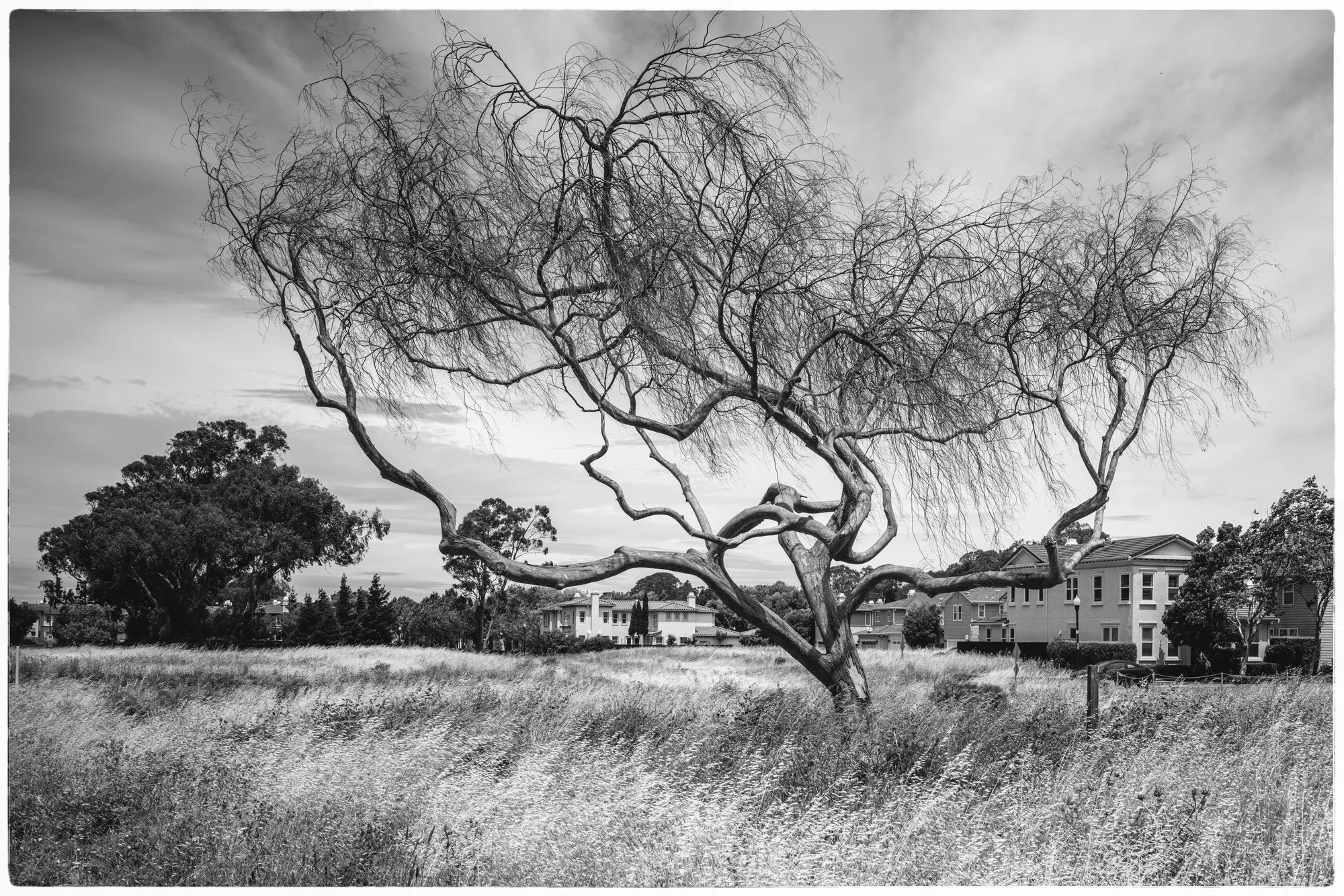
The frame is taken on Mare Island, but the frame does not belong to the series.
The point is not that the machine has taste. It does not, not in any sense I would defend. The point is that it has no stake in your self-deception, and if you have given it a clear enough account of your intentions, it will hold your weaker impulses up against them without mercy and without tiring. You still make the call. But you make it having been forced to look.
Where it ends
So that I am not mistaken for an enthusiast, let me be exact about the limits, because they are not minor.
It has no eyes in the human sense. It is not standing in front of your print; it never will be. It has no body, no room, no light falling across a sheet of paper, no twenty years of looking. It works on a compressed digital version of your file and on your words, and it routinely conflates looks like with was made — the sky episode is the clean example, and there will be others you do not happen to catch. Everything it says about your processing, your intent, your state of mind, is inference dressed as observation. Believe none of it on authority.
It will flatter you and it will conform to you if you let it. Ask it leading questions and you will get agreeable answers. Tell it the picture is great and it will find reasons. The entire value I have described depends on adversarial use — on pushing back, withholding your own verdict, and refusing to let it settle into telling you what you want. A mentor you cannot disappoint is not a mentor.
And it is not a substitute for the things it superficially resembles. It is not a substitute for your own final judgment, which remains yours alone and should. It is not a substitute for a human community of photographers, for the editor who has lived with your work for years, for the friend whose eye you trust because you know what they love and what they have given up. Those relationships have a stake and a history and a body in the room. The machine has none of these. It is a very well-read stranger who forgets you the moment the window closes, and it is healthiest to use it as exactly that and no more.
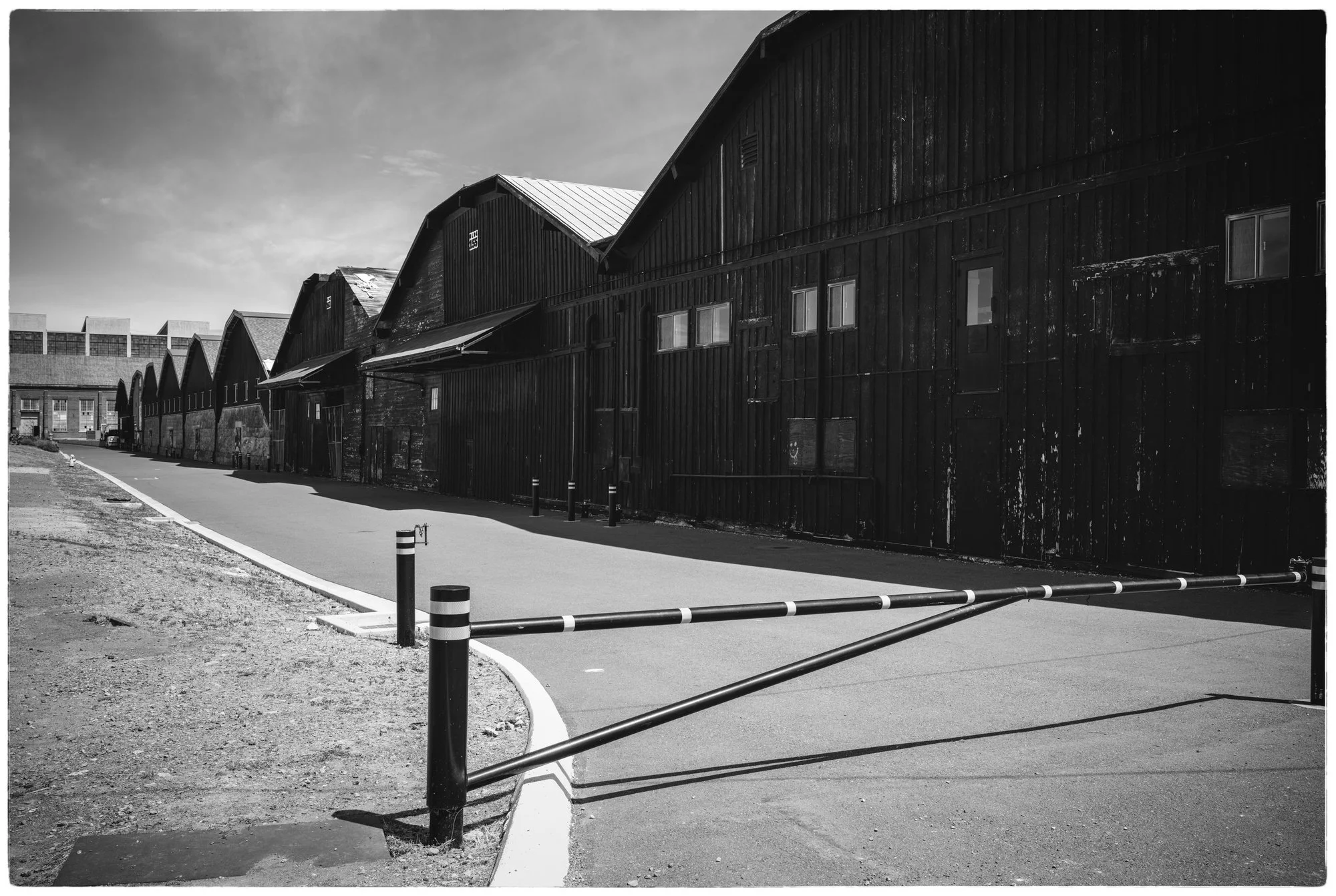
Another favorite of mine. Claude warned that in print shadows might need to be lifted a bit. It might be right.
There is a temptation, with a tool this fluent, to let it become the voice in your head — to start making pictures for its approval the way one can start making pictures for a gallery, or for the algorithm of a sharing site. That would be a quiet disaster. The work has to answer to your eye and to the place, not to a machine's account of either.
The whetstone, not the compass
Here is where I have landed after a few months of this.
The AI is not a compass. It does not know which way the work should go; when it tries to tell you, it is guessing from the canon, and you should refuse it. It is a whetstone. You bring it the dull, half-formed thing — the worry that a picture is ruin porn, the suspicion that a frame is thin, the body of work whose through-line you cannot quite name — and by pressing your judgment against its resistance, your judgment gets sharper. The edge is yours. The stone only gives you something to grind against, tirelessly, at two in the morning, without booking a studio visit or calling in a favor.
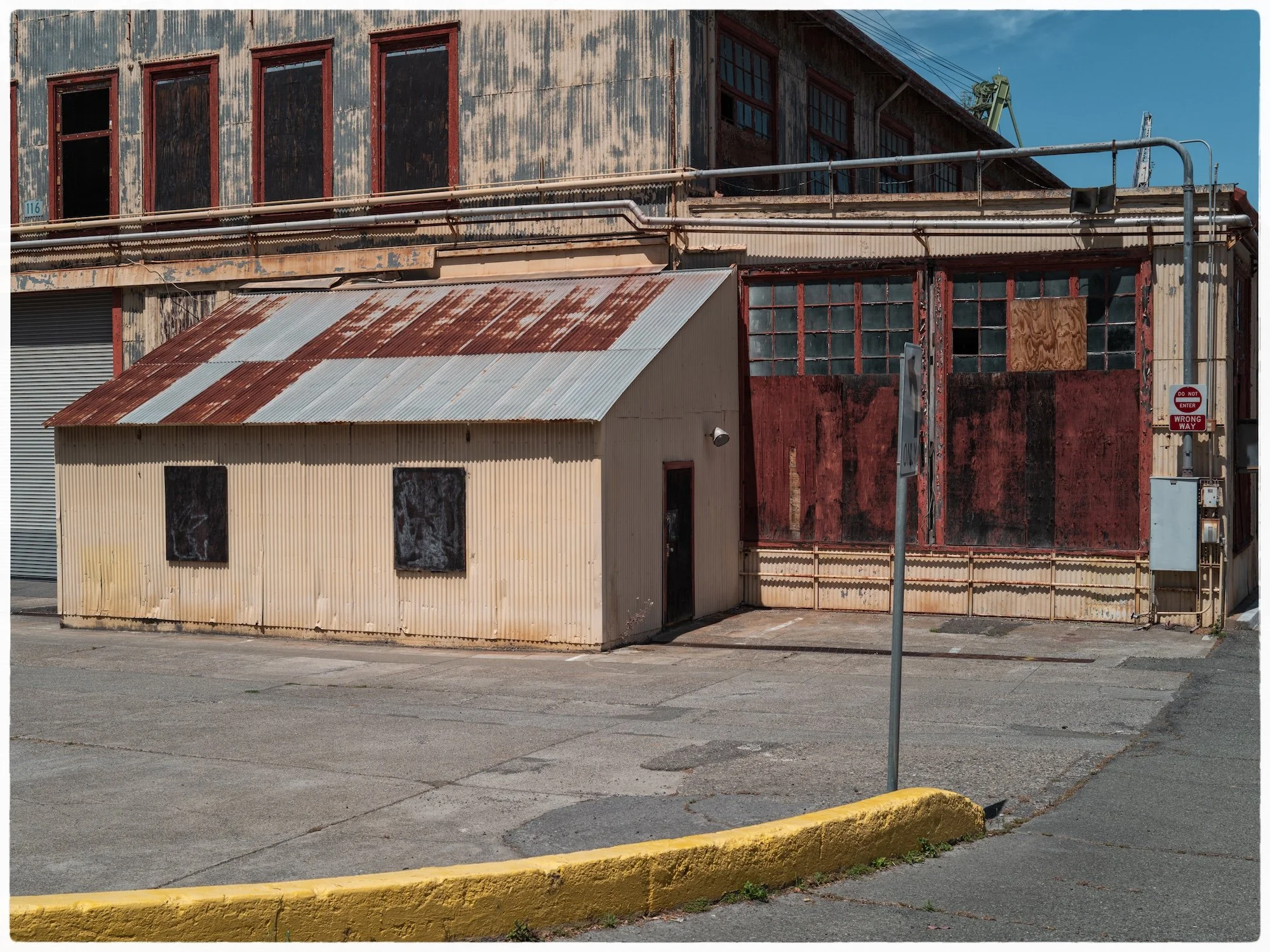
Not a ruin porn according to Claude. I’m still undecided.
That first Mare Island frame, the one I opened by asking whether it was ruin porn: the machine said no, and gave me a clean reason why — that ruin porn fetishizes decay for its own sake, and my frame had kept the boring regulatory facts, the painted curb and the traffic sign, the order still being maintained on an emptied place. It was a good answer. But the good answer is not why the exchange mattered. It mattered because, to argue with the machine about whether my picture was ruin porn, I had to decide what I thought ruin porn was, and what I thought my picture was for, and those are my questions to answer and the answers are now sharper than they were. The machine did not give me the photograph. It could not. It gave me a harder, clearer version of my own intention to bring back to the next one.
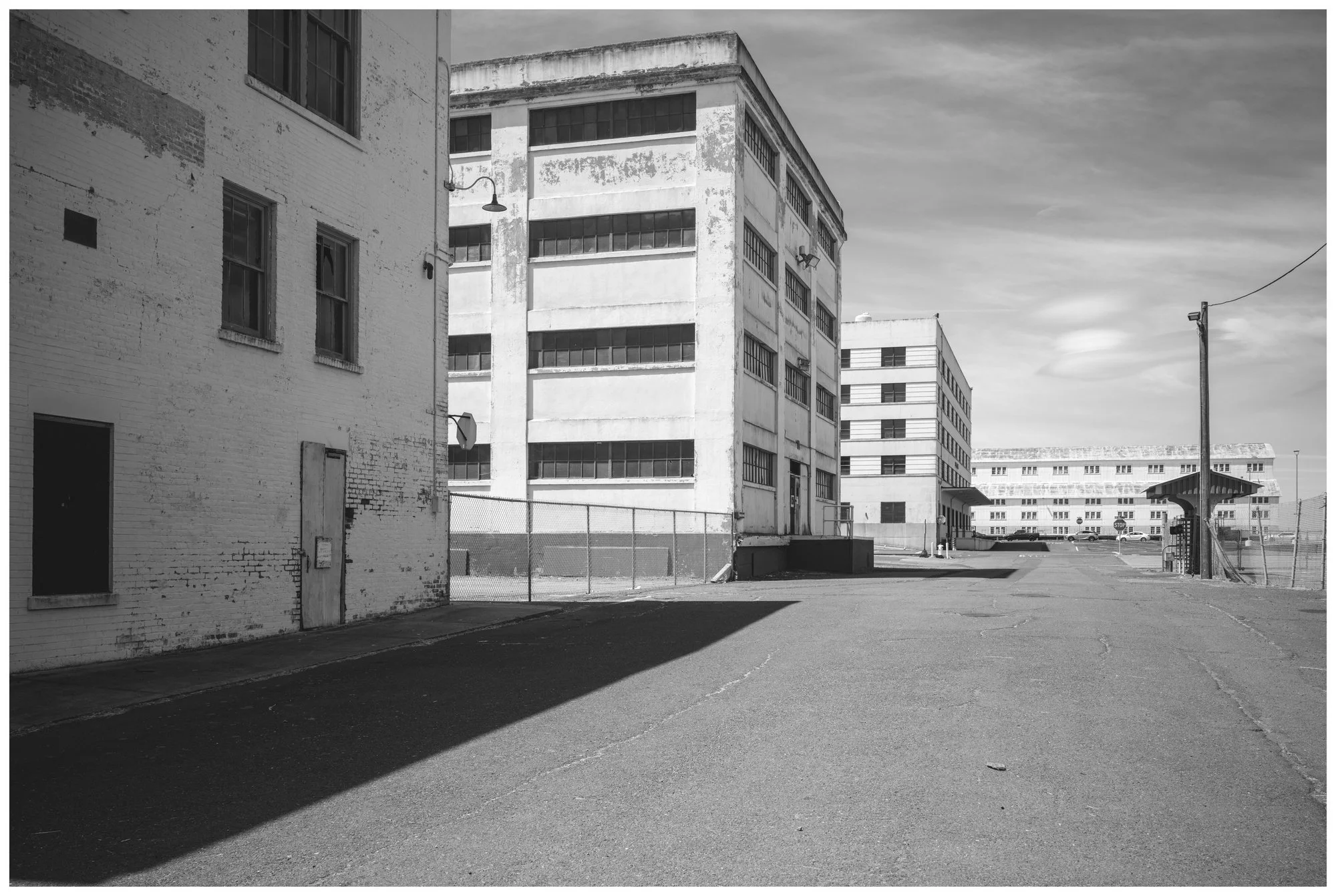
Too much foreground? Claude thinks — borderline.
Use it for that. Argue with it. Refuse its references, distrust its certainties, withhold your own verdict, and make it earn every concession. Keep your eye, your judgment, and your people. And when it tells you, in that smooth and confident voice, exactly what you did at the computer — remember that it cannot see your hands, and that the most useful thing it will ever do is be wrong in a way that makes you say precisely why.
In the next post in this series, I'll walk you through the actual prompts I use when I bring an image to the machine for critique. I'll show you real examples from my work — frames that succeeded, frames that failed, and the specific feedback that changed how I see them — so you can adapt the method to your own practice. The prompts are simple, but the way you frame the question determines everything about the answer you get back. That's where the real work begins.