The Other Side of Napa
This time I visited Napa.
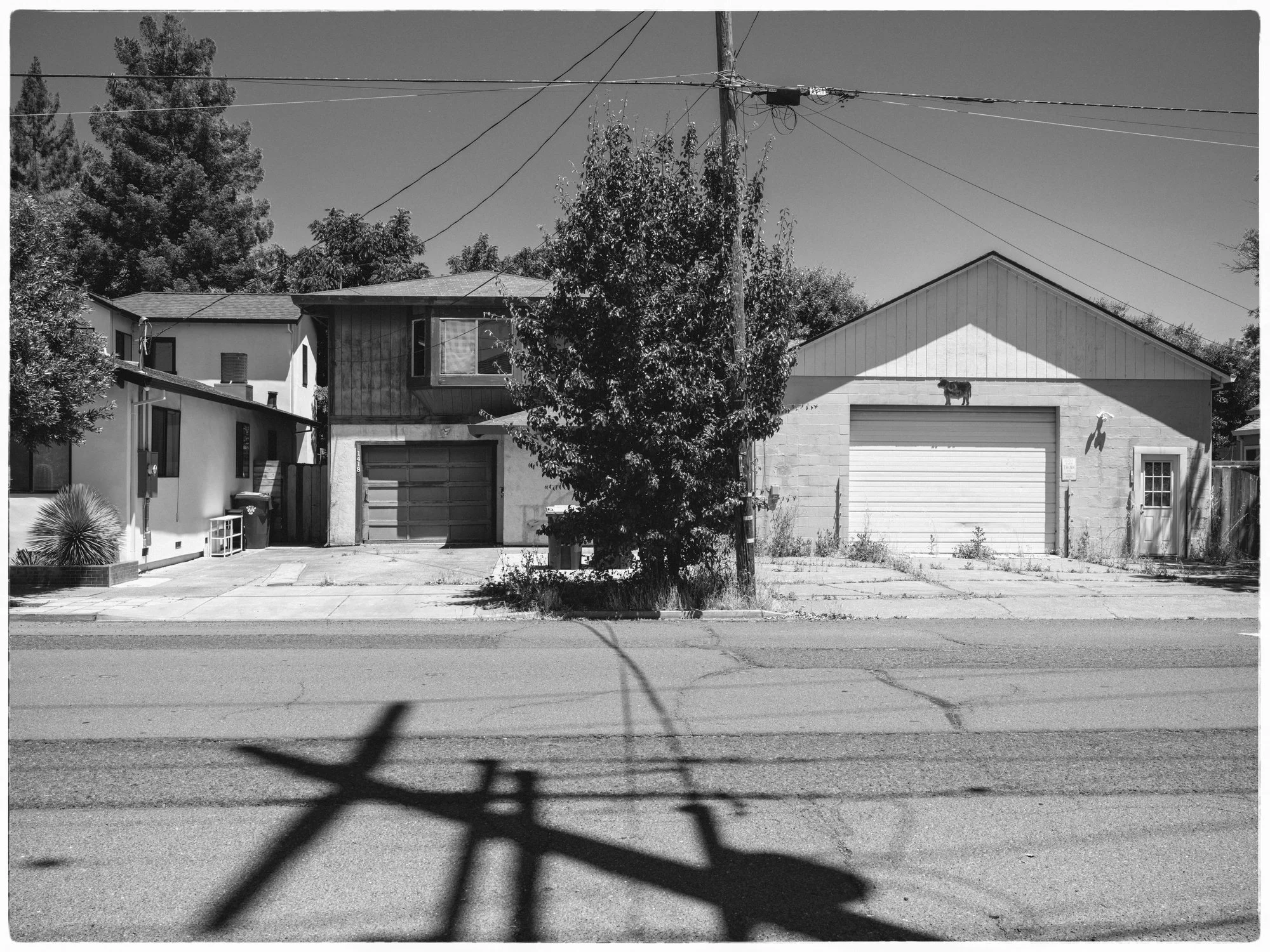
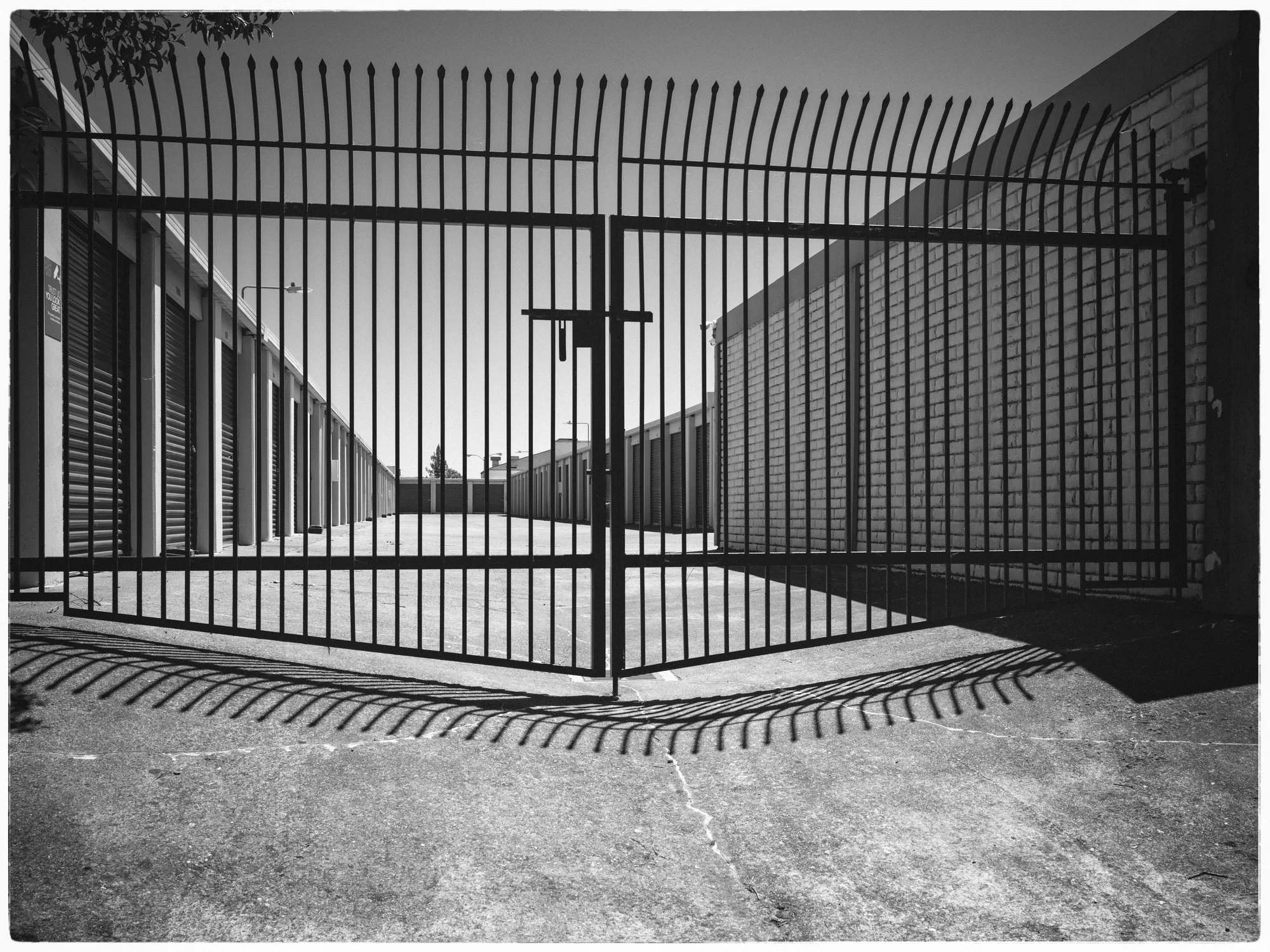
To me, visiting a place means trying to find the version of it that exists just outside the brochure. Not the postcard Napa, not the lifestyle Napa, but the working edges: railroad tracks, back walls, industrial buildings, storage lots, odd signs, sun-bleached utility structures, and the kinds of streets where nothing much appears to be happening.
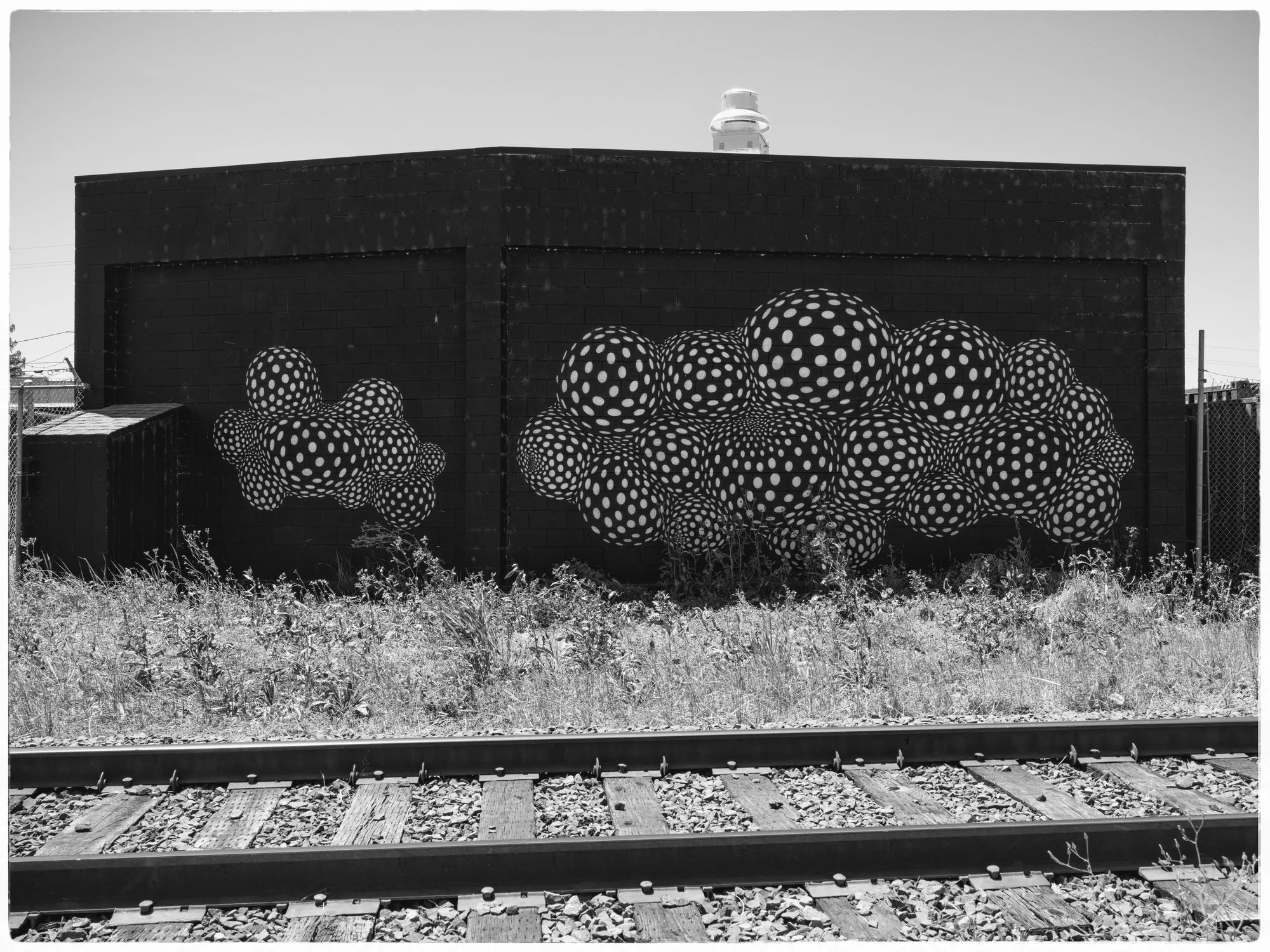
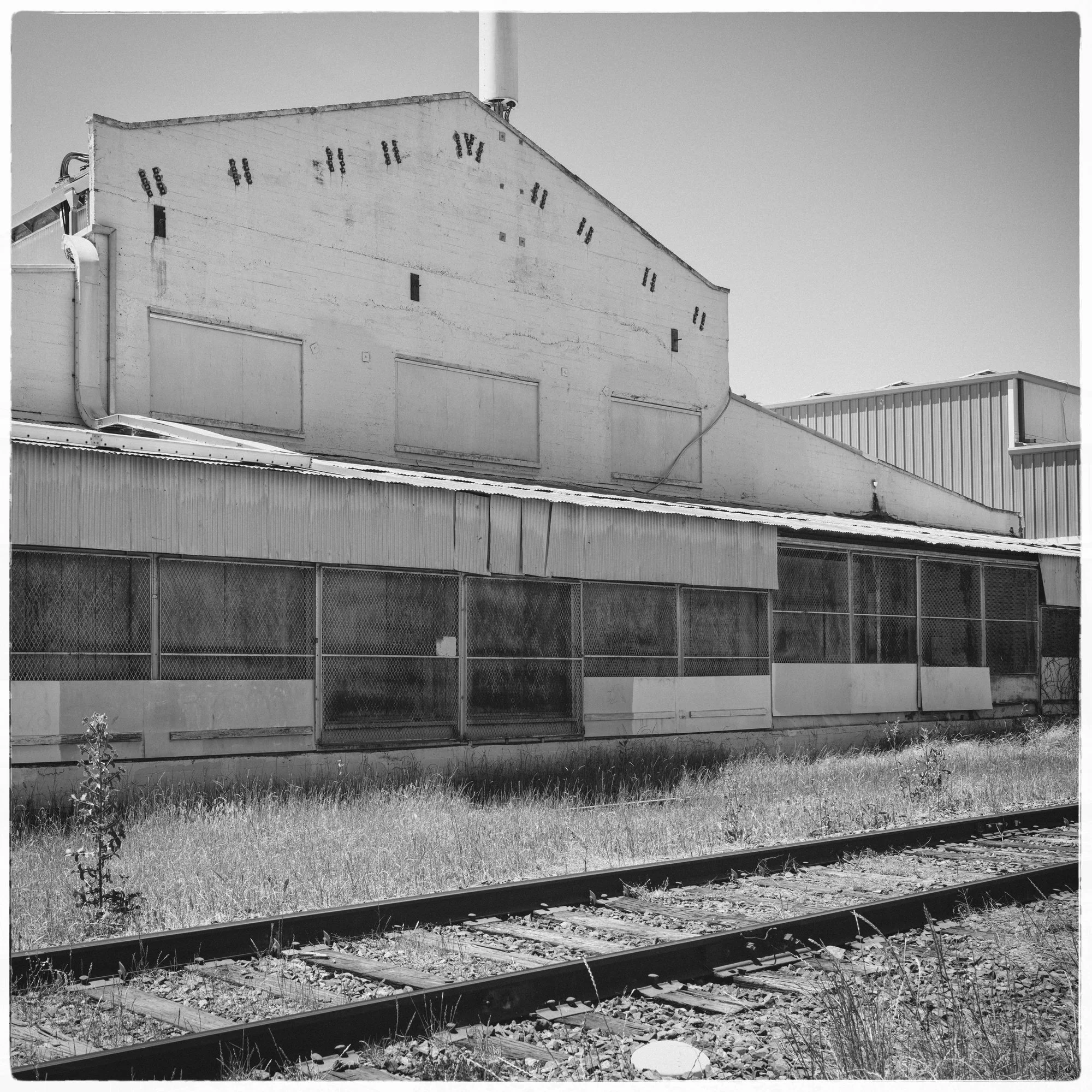
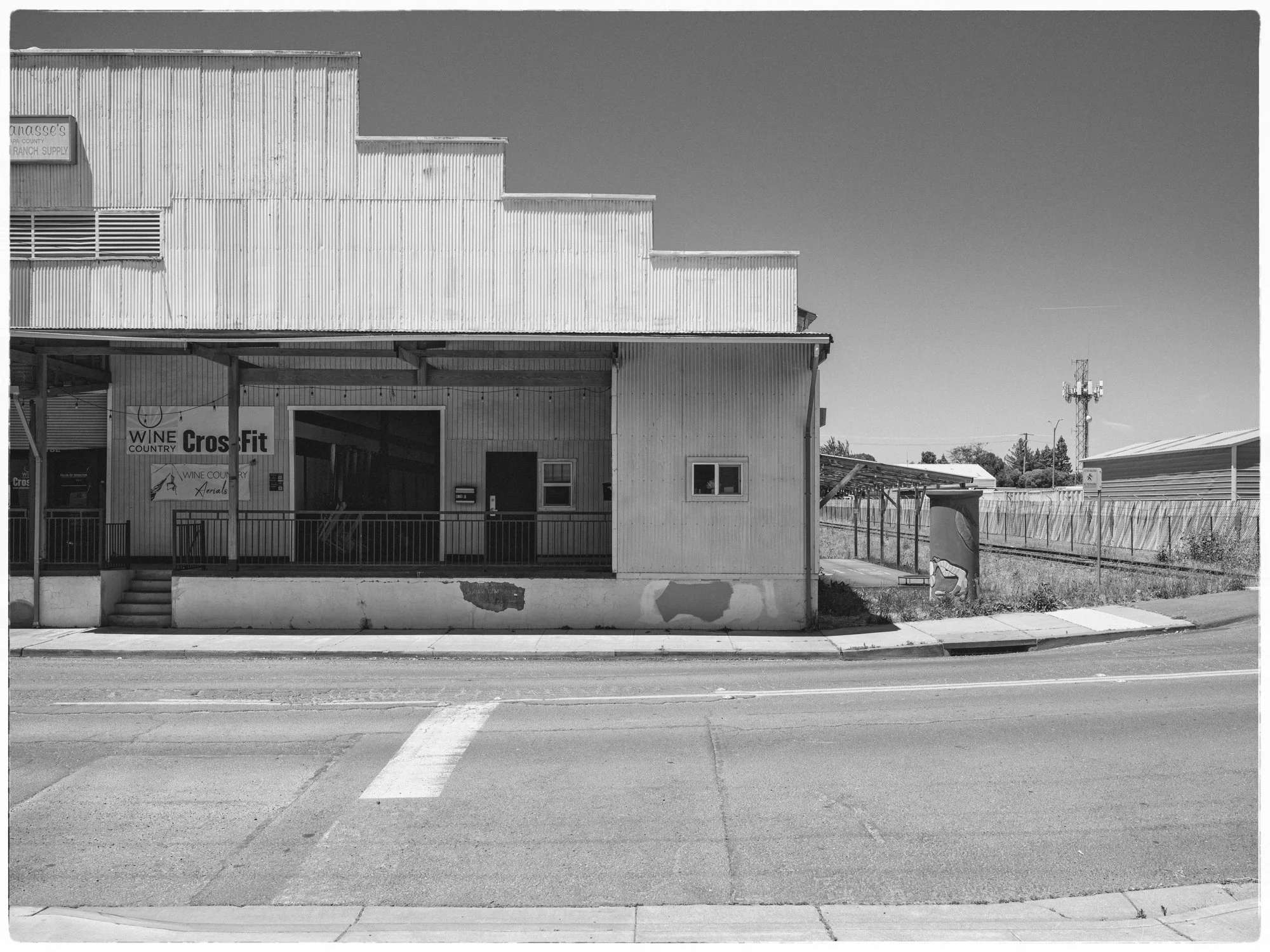
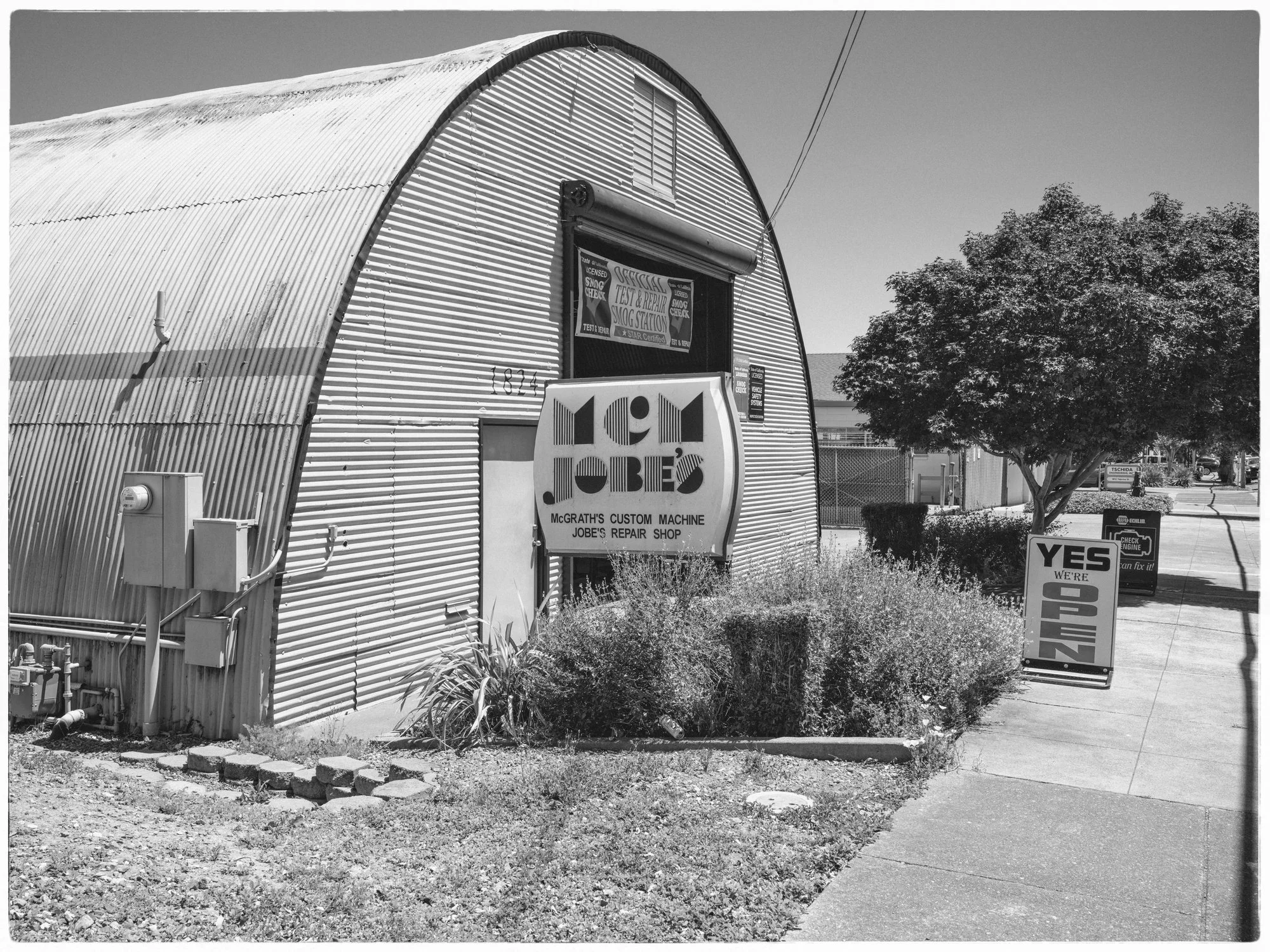
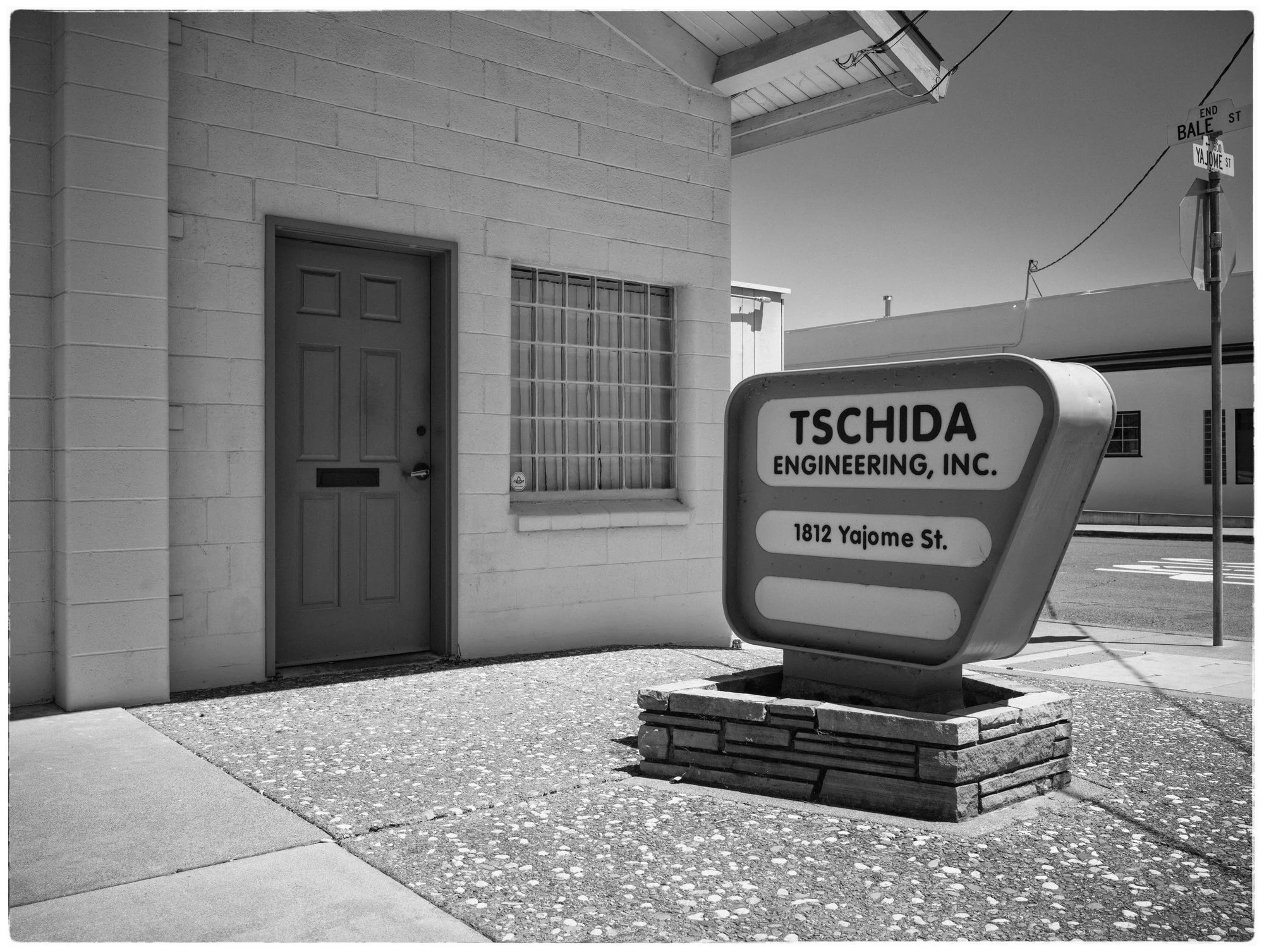
I had my Hasselblad with the XCD 38V mounted on it. The 38V does not let me hide behind reach or compression. It forces a kind of frontal honesty. You either organize the frame or you don’t. Napa offered plenty of modest structures that needed exactly that kind of treatment: corrugated façades, empty service lanes, utility yards, railroad lines, walls interrupted by signs and shadows, and buildings whose main virtue is that nobody has tried too hard to make them charming.
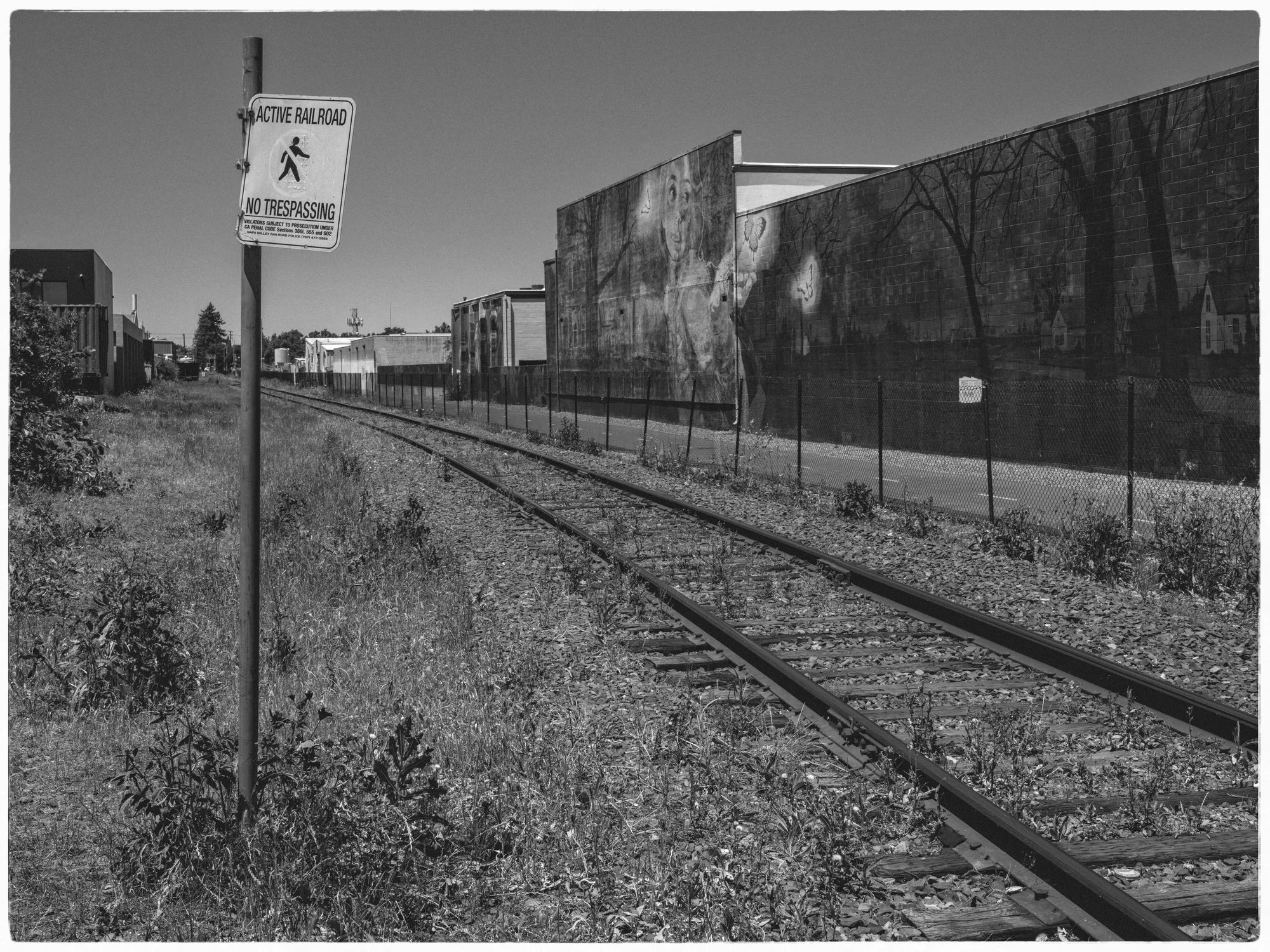
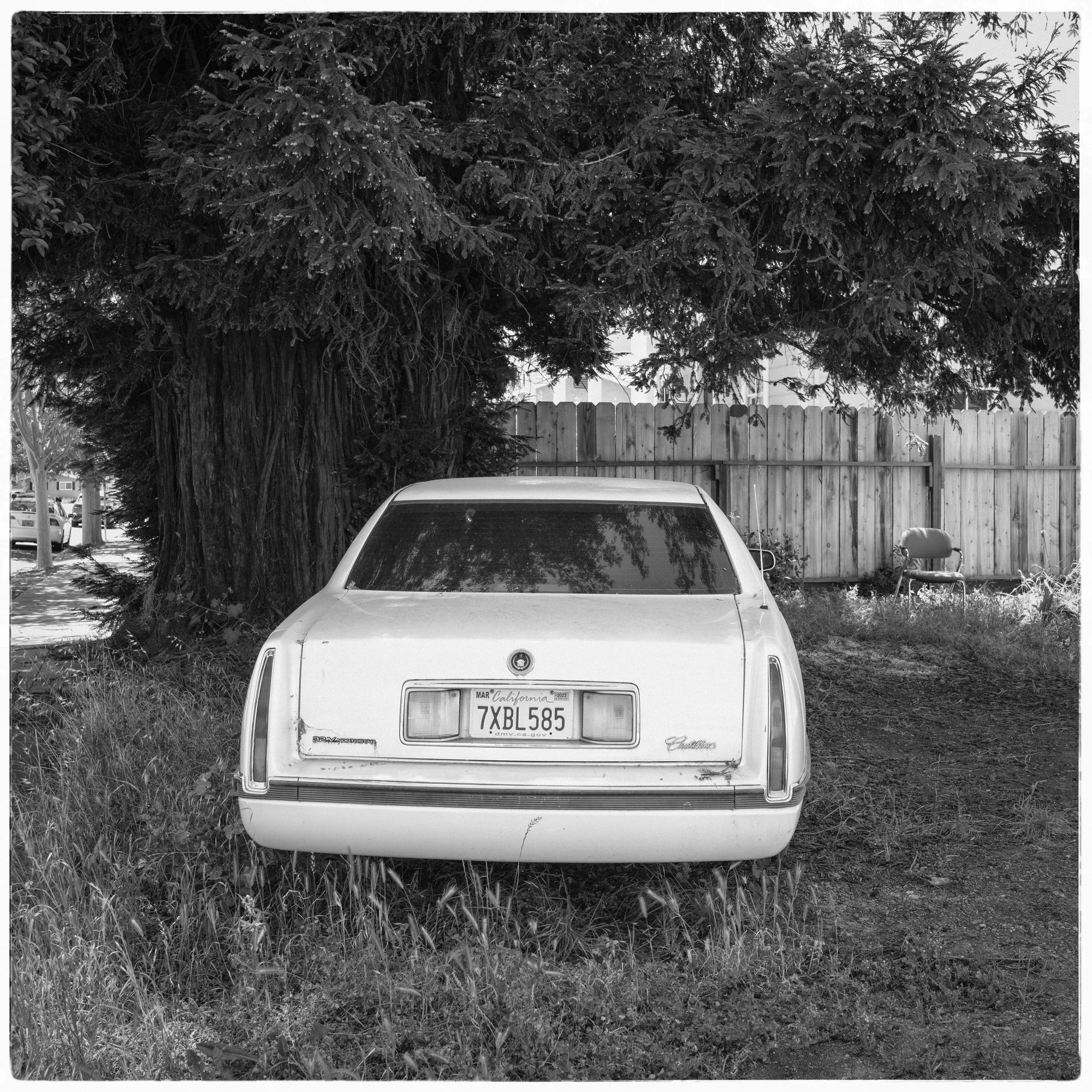
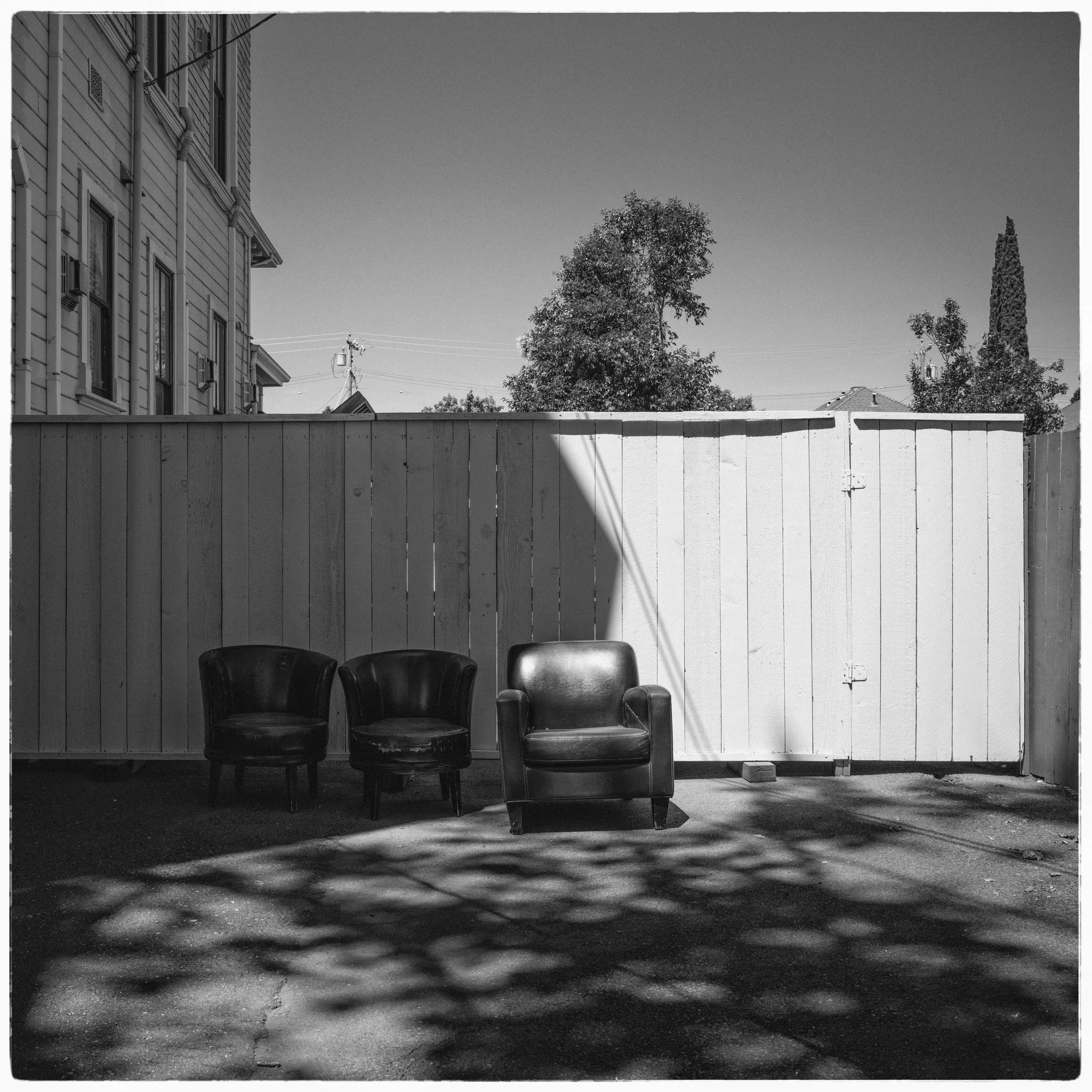
Charm is dangerous. It can soften a place until it becomes decorative. Napa has more than enough charm already. What interested me instead were the blunt, functional leftovers: the back side of commerce, the fragments of agricultural infrastructure, the anonymous buildings that support the prettier fiction happening elsewhere. In one frame, a railroad line runs beside a low industrial wall, with a small sign standing like a stubborn witness. In another, a warehouse façade sits in hard light, reduced almost to geometry. There is an old white car backed into shade, nearly absorbed by foliage, a little absurd and a little mournful. There are doors, pipes, signs, fencing, and the usual evidence that America is at its most photographically interesting when it forgets to pose.
The lineage here is not hard to locate. Baltz is the obvious reference whenever indifferent commercial architecture begins to dominate the frame. These are not the pristine industrial parks of Irvine, but they belong to the same family of blank usefulness and visual withholding. Robert Adams is present in the empty lots, the thin trees, the overbright roads, and the sense that the ordinary landscape has moral weight even when it refuses drama. George Tice appears less directly, mostly in the way signage, façades, and parked cars can become almost typological without becoming cold. And Gerry Johansson is probably the closest relative again: the frontal view, the restrained humor, the pleasure of looking at places that seem to offer nothing and then gradually offer more than expected.
The bright midday sun was not exactly merciful. It rarely is. But in this case the hard light helped. It flattened certain surfaces, sharpened the edges of signs and buildings, and gave the pictures a slightly unforgiving clarity.
I took only a few dozens of photographs, but the visit gave me something I like: a small counter-argument to the advertised image of a place. That version is less seductive, but more interesting to me. It has less polish and more structure.
There is always more hiding behind the approved scenery, and places like Napa are especially good at concealing their ordinary machinery behind a cultivated public face. For now, I have the photographs I came for: a few plain, stubborn fragments from the other side of Napa.